
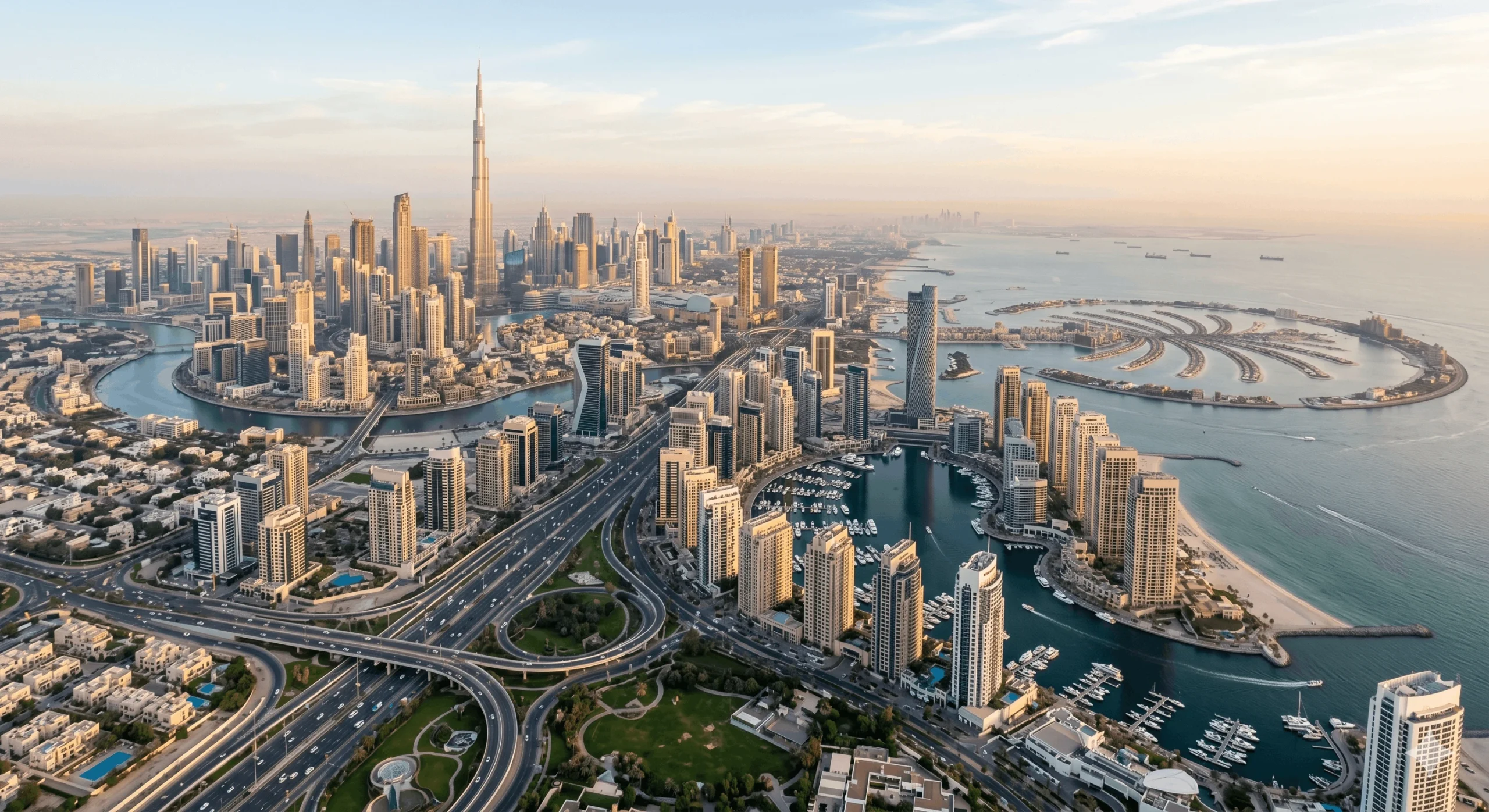
You do not need a UAE passport to own property in Dubai. You do not need a residency visa. You do not need a local partner or a sponsor. You just need a passport and a purchase budget.
That surprises most Sydney investors hearing it for the first time. The assumption is that Middle Eastern property markets restrict foreign ownership. Dubai freehold properties does the opposite. It actively encourages it.
This guide explains everything Sydney investors need to know about Dubai freehold properties for foreigners. You will learn what freehold actually means, which zones offer the best returns, what the total costs look like in AUD, and how the regulatory framework protects your investment at every step.
What Does Freehold Ownership Mean in Dubai?
Freehold is a term Australian investors understand instinctively. But in Dubai, it carries specific legal weight that is worth unpacking before you commit any capital.
Understanding the distinction between freehold and other ownership types protects you from buying in the wrong structure.
Full Ownership With No Time Limit
Freehold ownership means you own both the property and the land it is built on. You have complete control over your asset, including the right to sell, lease, or mortgage without restrictions.
Your title deed is registered directly with the Dubai Land Department in your name. There is no expiry. No renewal. No government approval needed to sell. Dubai freehold properties for foreigners carry the same legal standing as those owned by UAE nationals within designated zones. For Sydney investors used to the Australian Torrens title system, this feels familiar. Your name on the deed means you own it. Period.
Inheritance Rights Included
Owners hold the right to pass the property on to their heirs without restrictions. This is a critical detail for Australian investors thinking long-term. Your Dubai freehold properties for foreigners can be bequeathed to your children or spouse under your will.
However, the UAE inheritance law can be complex for non-Muslim foreign nationals. A registered will with the Dubai International Financial Centre (DIFC) Wills and Probate Registry ensures your Australian succession wishes are honoured. This is a one-time registration that costs approximately AED 10,000.
Freehold vs Leasehold vs Usufruct
Not all property ownership in Dubai freehold properties. Leasehold grants use rights for up to 99 years. Usufruct grants even more limited access. Both have weaker protections and less flexibility.
Dubai freehold properties for foreigners are the gold standard. They give you the strongest legal position, the most liquidity when selling, and full DLD registration. For investment purposes, freehold is the only structure worth considering.

Where Can Foreigners Buy Freehold Property in Dubai?
Not every part of Dubai allows foreign ownership. The city is divided into designated freehold zones and restricted areas. Knowing which is which prevents costly mistakes.
Foreigners can buy freehold property in over 60 designated areas across Dubai. These zones were established under Regulation No. 3 of 2006 and grant non-UAE nationals full ownership rights with no time limit.
Most Popular Freehold Zones for Investors
These communities attract the highest transaction volumes from foreign buyers. Each one offers proven rental demand, strong infrastructure, and established resale markets.
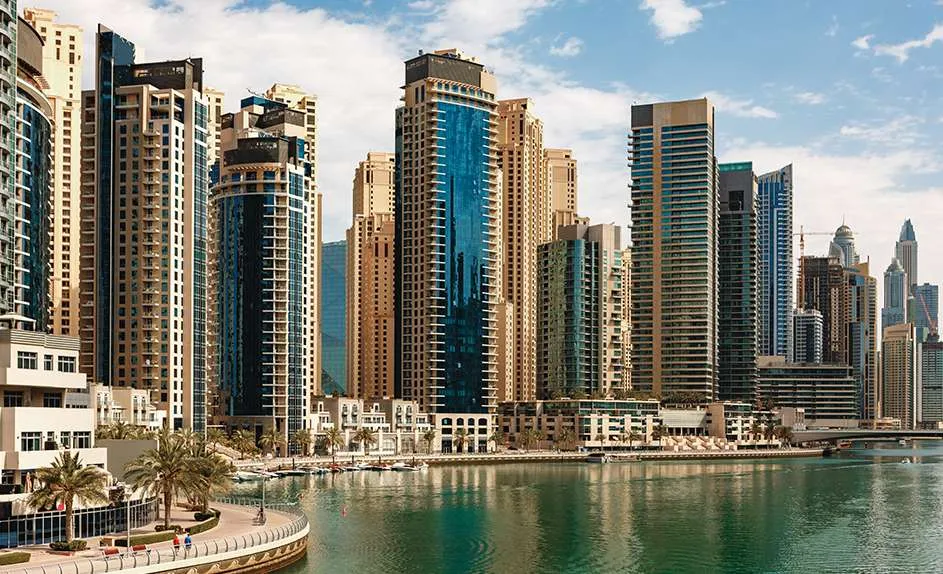
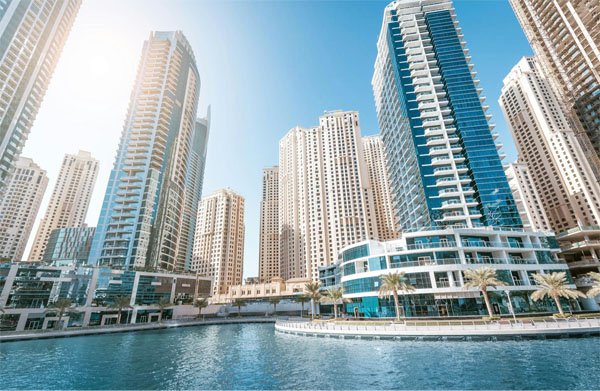
- Dubai Marina: Waterfront living, strong short-term rental demand, yields of 6.5% to 7.5%
- Jumeirah Village Circle (JVC): Highest yields in the city at 7% to 9%, affordable entry from AUD 220,000
- Business Bay: Central location, corporate tenant base, yields of 7% to 8%
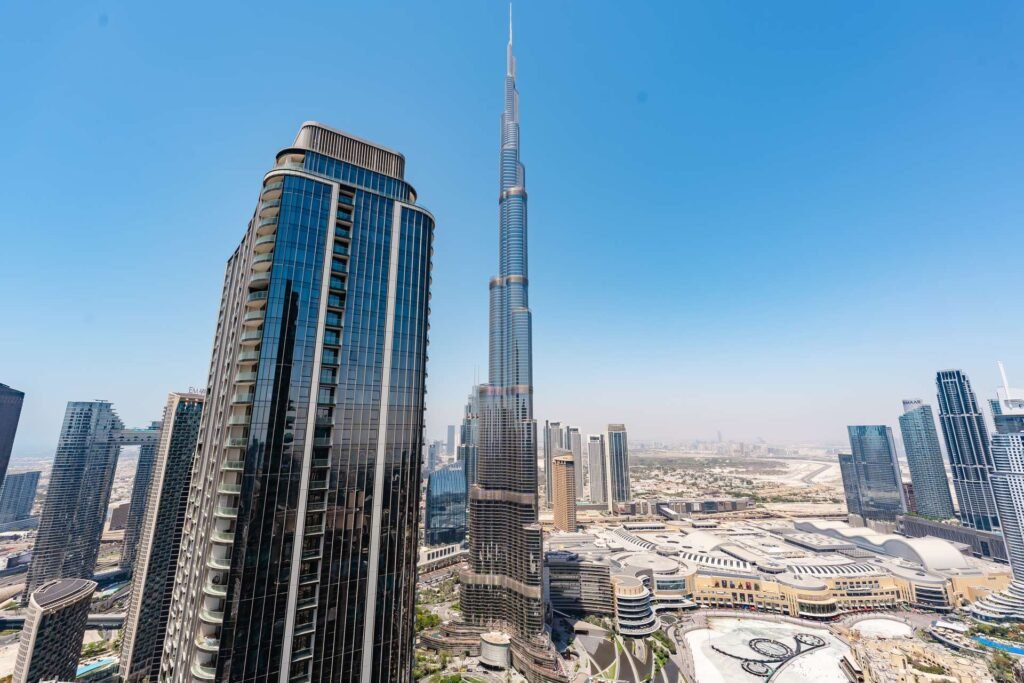
- Downtown Dubai: Prestige address, Burj Khalifa proximity, strong capital appreciation
- Dubai Hills Estate: Family-oriented, parks and schools, villas and apartments
- Palm Jumeirah: Ultra-premium, lower yields but exceptional capital preservation
- Dubai Creek Harbour: Emerging Emaar community, strong off-plan growth potential
For Sydney investors exploring Dubai freehold properties for foreigners on a moderate budget, JVC and Dubai South offer the lowest entry points. Marina and Business Bay suit mid-range budgets. Palm Jumeirah and Downtown target high-net-worth buyers.
Newly Designated Freehold Zones
The Dubai government continues expanding freehold access. Five new or expanded freehold designations were added between 2023 and 2025. Nad Al Sheba received an expanded freehold designation in 2024. Al Jaddaf was expanded with new waterfront tower projects along Dubai freehold properties Creek. Wadi Al Safa opened new villa communities. Dubai Science Park expanded its freehold component to include residential towers.
These newer zones offer early-mover pricing advantages. Entry costs are lower because the communities are still maturing. As infrastructure develops and population grows, values are expected to follow the trajectory of established freehold zones.
Restricted Areas to Avoid
Specific areas remain off-limits for foreign freehold ownership. These include Deira, Bur Dubai, Karama, Satwa, Oud Metha, Al Qusais, and Al Rashidiya. Some offer long-term leasehold arrangements, but the terms are weaker, and the investment case is significantly less compelling.
Stick to designated freehold zones. The selection is wide enough to suit every budget and every strategy.
Dubai Freehold Properties for Foreigners Cost in AUD?
Pricing varies dramatically depending on the zone, the unit type, and whether you buy off-plan or ready. Here is what Sydney investors should expect in 2026.
Understanding these ranges helps you set a realistic budget before you start comparing properties.
Entry-Level Pricing (Studios and One-Beds)
Studio apartments in emerging communities start from AED 350,000 (approximately AUD 150,000). One-bedroom apartments in established mid-market areas average AED 900,000 (approximately AUD 380,000).
For context, an AUD 150,000 studio in International City or Dubai South generates a gross yield of 8% to 9%. That same capital in Sydney would not even cover a deposit on a one-bedroom unit. The contrast in entry accessibility is stark.
Mid-Range Pricing (One-Beds in Prime Areas)
One-bedroom apartments in Dubai Marina, Business Bay, and JLT range from AUD 350,000 to AUD 550,000. These communities offer established tenant demand, mature infrastructure, and proven resale markets.
At this price point, you access premium locations with gross yields of 6.5% to 8%. These Dubai freehold properties for foreigners suit Sydney investors who want a balance of income and long-term capital appreciation.
Premium Pricing (Two-Beds and Above)
Two-bedroom apartments in prime zones average AED 1.8 million (approximately AUD 765,000). Villas in master-planned communities start from AED 2.5 million (approximately AUD 1.06 million).
Properties at this tier qualify for the UAE Golden Visa. They also attract the strongest tenant profiles: families, senior executives, and long-term residents. Capital preservation is the primary appeal, supported by consistent demand.
Total Acquisition Costs Beyond the Purchase Price
Total acquisition costs run approximately 7.5% to 8% of the purchase price. This includes the 4% DLD transfer fee, 2% agency commission plus VAT, an admin fee of AED 580, and an NOC fee of AED 500 to AED 5,000.
On an AUD 400,000 purchase, budget roughly AUD 30,000 to AUD 32,000 in additional costs. This covers everything from registration to agency fees. There is no stamp duty. No annual property tax. No capital gains tax in the UAE. The cost structure is dramatically simpler than buying in Sydney.
Australian Investors Choose Dubai Freehold Properties
The financial case is strong. But the appeal goes beyond just yields and entry prices. Dubai’s ownership framework offers structural advantages that Sydney’s market simply cannot match.
Each benefit compounds over time, making the long-term investment case increasingly powerful.
Zero Tax on Rental Income
The UAE charges no income tax on rental earnings. If your Dubai freehold properties for foreigners generate AED 60,000 per year in rent (approximately AUD 25,500), you keep every dirham before Australian tax obligations.
Compare that to a Sydney investment property. After strata levies, council rates, land tax, insurance, and water rates, your gross yield shrinks dramatically before you even consider income tax. Dubai eliminates most of those cost layers entirely.
Rental Yields That Outperform Sydney
The most affordable freehold communities posted the highest gross yields, ranging from 8.4% to 9.8%. Even premium zones deliver 5.5% to 7.5% gross.
Sydney’s average gross yield sits at 3.3%. Net yield after costs drops to around 2.3%. The gap between Dubai freehold properties and Sydney returns is not marginal. It is substantial enough to reshape a long-term portfolio strategy.
Golden Visa Residency Pathway
Dubai freehold properties for foreigners valued at AED 2 million or above qualify for the 10-year UAE Golden Visa. This visa covers you, your spouse, and your dependents. No minimum stay requirement. No employer sponsor needed.
For a detailed breakdown of how the Golden Visa works for Australian investors, our guide on Dubai Golden Visa Property covers thresholds, application steps, and the 2026 reforms in full.
Step-by-Step Buying Process for Australian Investors
Purchasing Dubai freehold properties for foreigners follows a defined, regulated sequence. Knowing the steps in advance removes uncertainty and helps you move confidently.
The entire process can be completed without visiting Dubai, though many Sydney investors prefer starting at a live expo.
Step 1: Choose Your Property and Make an Offer
Select your unit from a freehold zone. If buying off-plan, you work directly with the developer. If buying resale, you work through a RERA-licensed agent. You sign a Memorandum of Understanding (MOU) or reservation form and pay a booking deposit (typically 10% for off-plan).
Step 2: Complete DLD Registration
For off-plan purchases, the developer registers your contract through Oqood. For ready properties, the transfer happens at a DLD trustee office. Your title deed issues within 1 to 3 hours at the DLD trustee office. You pay the 4% DLD transfer fee at this stage.
Step 3: Complete Remaining Payments
For off-plan, payments follow the agreed schedule tied to construction milestones. For ready properties, the full balance is due at transfer. Use a specialist forex provider to transfer AUD to AED. Banks charge steep margins. Services like Wise or OFX save thousands per transaction.
You can explore qualifying projects and meet developers face-to-face at the Dubai Property Expo Sydney without flying to Dubai freehold properties.
Australian Tax Obligations on Dubai Freehold Property
Owning Dubai freehold properties for foreigners does not exempt you from the ATO. Australian tax law applies to worldwide income regardless of where the property sits.
Getting this right from day one prevents expensive surprises at tax time.
Declaring Dubai Rental Income
Rental income from your Dubai freehold property must appear on your Australian tax return. The UAE charges zero income tax locally. No double taxation applies. You can claim allowable deductions against your Dubai freehold properties rental income, including:
- Property management fees (typically 5% to 8% of annual rent)
- Service charges paid to the building or community
- Insurance premiums
- Depreciation of building and fixtures (where applicable under ATO rules)
- Travel costs for property inspection (subject to ATO guidelines)
Capital Gains on Sale
If you sell your Dubai freehold property at a profit, the gain is taxable in Australia. The UAE charges no capital gains tax. If you hold the property for more than 12 months, you may qualify for the 50% CGT discount. Factor this into your exit planning.
SMSF Considerations
Purchasing through a Self-Managed Super Fund is permitted but strictly regulated. The property must fit your fund’s documented investment strategy. It must be an arm’s-length transaction. It cannot provide personal benefit to fund members.
Get written advice from both your SMSF accountant and a tax advisor who understands overseas assets. Compliance errors carry severe ATO penalties.
Frequently Asked Questions
Can Australians buy Dubai freehold properties for foreigners without a visa?
Yes. You do not need a residency visa, a UAE bank account, or a local sponsor to purchase in any designated freehold area. Your Australian passport is the only identity document required. The entire purchase can be completed remotely if preferred.
How many freehold zones exist in Dubai as of 2026?
Dubai freehold properties has over 60 designated freehold zones. New zones, including Nad Al Sheba, Al Jaddaf, Wadi Al Safa, and Dubai Science Park, were added between 2023 and 2025. The government continues to expand access, creating early-mover pricing opportunities in newer designations.
What is the cheapest freehold property available for foreign buyers?
Studio apartments in emerging communities start from AED 350,000 (approximately AUD 150,000). International City and Dubai South offer the lowest entry points. With off-plan payment plans, you can secure a unit with as little as AUD 15,000 to AUD 20,000 upfront.
Is there an annual property tax on Dubai freehold properties for foreigners?
No. Dubai charges no annual property tax, no capital gains tax, and no income tax on rental earnings. The only mandatory government cost is the one-time 4% DLD transfer fee at purchase. This makes Dubai one of the lowest total-cost-of-ownership markets globally for property investors.
How do I explore Dubai freehold properties for foreigners without travelling?
The Dubai Property Expo Sydney brings licensed developers to Australia multiple times per year. You can view freehold projects, compare pricing across zones, and discuss ownership structures with advisors who understand the Australian investor framework. Check the website for the upcoming 2026 dates.
Start Your Freehold Journey from Sydney
Dubai freehold properties for foreigners give Australian investors something rare: full ownership, zero tax, high yields, and Golden Visa eligibility in a single package. Over 60 designated zones are open to foreign buyers. Entry starts from AUD 150,000. No visa required. No sponsor needed. No annual property tax.
Apartment prices increased 11.2% in the 12 months ending March 2026. Villa prices rose 14.7% over the same period. The market is moving. Every month you wait is a month where entry prices climb higher.
The Dubai Property Expo in Sydney connects you directly with developers offering freehold projects across every price tier. Meet them face to face.