Quick Answers:
- Q1 2026 recorded AED 252 billion in transactions, up 31% year-on-year
- Price growth has moderated to 3% to 6% annually from 15%+ in 2024
- Average rental yields remain strong at 6.68% across the Dubai property market
- Over 50,000 new units are scheduled for handover in 2026
- May 2026 transactions dropped 19% as buyers negotiate harder post-ceasefire
Every Sydney investor considering Dubai is asking the same question right now. Buy now or wait? Dubai home sales dropped around 19% in May. Monthly transaction value is roughly halved compared to the pre-conflict run rate. Headlines scream correction. Social media predicts crashes.
But the Dubai property market forecast 2026 tells a more nuanced story. Record Q1 numbers. Moderated growth. A ceasefire in place. And buyers who have not disappeared. They are just negotiating harder.
This guide uses verified data to answer the question honestly. Not with hype. Not with fear. With numbers.
What the Q1 Data Shows
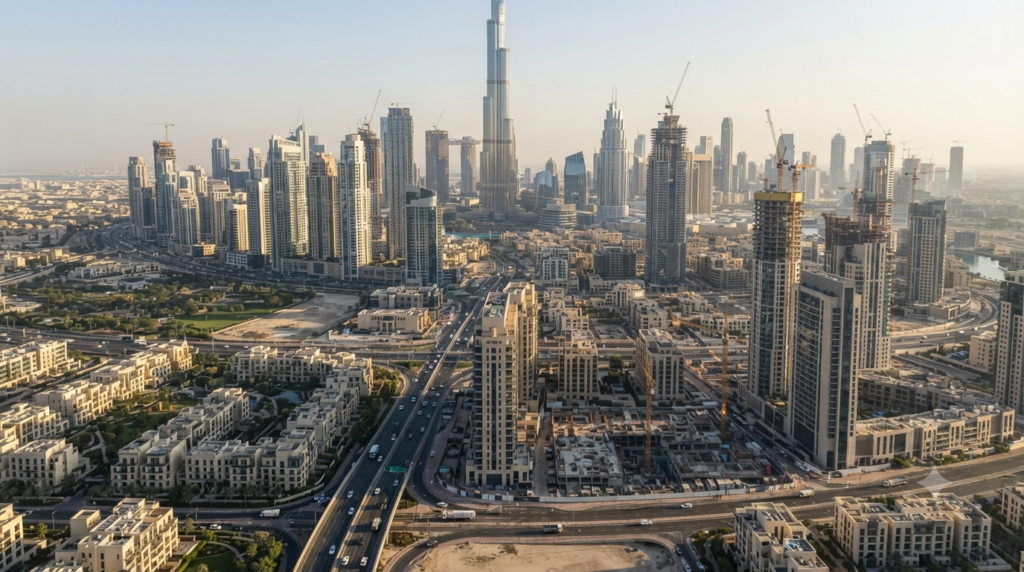
The first quarter of 2026 broke every previous record in Dubai real estate history. Understanding these numbers provides the baseline for any honest Dubai property market forecast 2026 analysis.
Record Transactions
The Dubai Land Department recorded AED 252 billion across 60,303 transactions in Q1 2026. Value rose 31% year on year. Volume rose 6%.
Foreign investment reached AED 148.35 billion, up 26%. Foreign transactions rose 11% to 48,445 deals. These are not speculative numbers. They are government-verified records. The market entered 2026 from a position of extraordinary strength.
New Investor Growth
29,312 new investors entered the market in Q1 alone. That is a 14% increase year on year. Dubai property market is not recycling existing buyers. It is attracting entirely fresh capital from over 100 nationalities.
Women investors accounted for 15,540 transactions worth AED 32 billion. The buyer pool is diversifying. That diversity reduces dependence on any single economy. A broadening investor base is one of the strongest signals in any Dubai property market forecast for 2026.
Yield Stability
Average rental yields remain globally competitive. Here is the breakdown as of May 2026:
| Property Type | Average Rental Yield |
| Apartments | 7.15% |
| Villas | 4.98% |
| Overall | 6.68% |
Sydney’s average net yield sits at 2.3%. The gap remains enormous despite moderated growth. These yield fundamentals underpin the positive side of the Dubai property market forecast 2026.
These Q1 figures highlight the key trends shaping the Dubai property market in 2026. Examining transaction activity, investor growth, and rental yields provides a clearer picture of the market’s current strength and future direction.
What Changed After the War
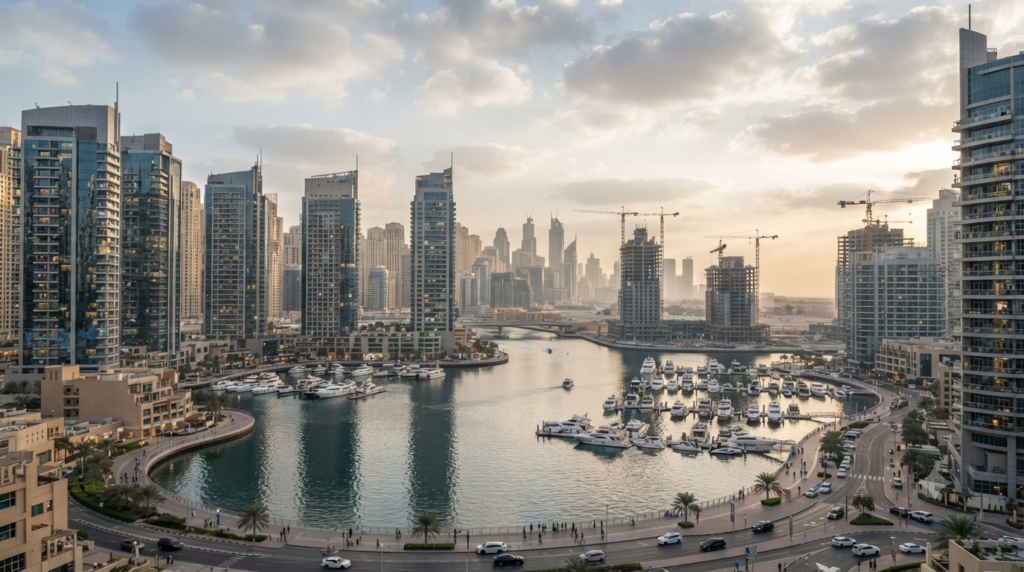
The Iran conflict created genuine disruption. Acknowledging it honestly is essential for any credible forecast. Ignoring it would be dishonest. Exaggerating it would be irresponsible.
Transaction Impact
Real estate transaction volumes in the UAE fell 37% year-on-year in the first 12 days of March. May sales dropped roughly 19% from the pre-conflict run rate.
Off-plan secondary apartments are trading 10% to 15% below original values in many cases. This is concentrated in speculative purchases, not end-user holdings. The impact is real but contained. It is sentiment-driven, not structural.
Price Movement
Prices dropped 4% to 7% from their peak across the broader market. Fitch had already forecast a possible correction of up to 15% driven by supply, even before the conflict started.
The war accelerated a moderation that analysts expected anyway. It did not create a collapse. Buyers have not disappeared. They are negotiating harder. For Sydney investors, this moderate softening improves entry pricing without signalling structural risk.
Recovery Signals
Following the ceasefire and Strait of Hormuz reopening, UAE equities climbed to a three-month high. Institutional desks began referring to a “new cycle.”
Villa rental contracts above AED 1 million rose 27% year on year in the first five months of 2026. Wealthy occupiers are choosing to rent at record levels rather than buy in uncertainty. The Dubai property market forecast for 2026 is shifting from disruption to recovery. The direction has changed.
While the conflict created short-term uncertainty, its effects were concentrated in specific market segments rather than the entire property market. Understanding these changes helps investors distinguish temporary sentiment shifts from long-term market fundamentals.
Price Forecast by Segment
Not every segment will perform equally. The Dubai property market forecast 2026 requires segment-specific analysis. From our experience advising Sydney investors, selective buying will define this market cycle.
Luxury Segment
Ultra-luxury and branded residences above AED 5 million are forecast to appreciate 8% to 12%. Supply remains scarce. The luxury segment reached AED 87.71 billion in Q1, up 26%.
There is not enough top-tier trophy stock to satisfy demand. For owners of scarce waterfront and villa assets, rental income is strengthening even as headline values soften slightly. Palm Jumeirah and Emirates Hills lead this segment for Sydney’s high-net-worth investors.
Prime Apartments
Downtown, Marina, and Business Bay apartments (AED 2M to AED 5M) are forecast for 5% to 8% growth. High demand from both investors and end-users supports valuations.
| Area | AED/sqft (2026) | Forecast Growth |
| Downtown Dubai | 2,980 | 5 to 8% |
| Dubai Marina | 2,133 | 5 to 8% |
| Business Bay | 2,900 | 5 to 8% |
| Dubai Hills Estate | 1,750 | 7 to 10% |
These areas offer the strongest balance of yield and appreciation for mid-range budgets.
Mid-Market Areas
JVC, JLT, and Arjan (AED 700K to AED 2M) face a larger supply pipeline. Growth forecast: 3% to 6%. Yields remain strong at 6% to 8%, which provides a floor under prices.
| Area | AED/sqft (2026) | Forecast Growth |
| JVC | 1,448 | 3 to 6% |
| JLT | 1,500 | 3 to 6% |
| Dubai South | 950 | 5 to 8% (infrastructure-driven) |
| DAMAC Hills 2 | 1,100 | 3 to 5% |
Competition among sellers will increase in these areas. But for yield-focused Sydney investors entering at entry-level prices, rental returns remain significantly above Sydney benchmarks. The Dubai property market forecast 2026 favours selective area choice over broad market exposure.
Key Growth Catalysts Ahead
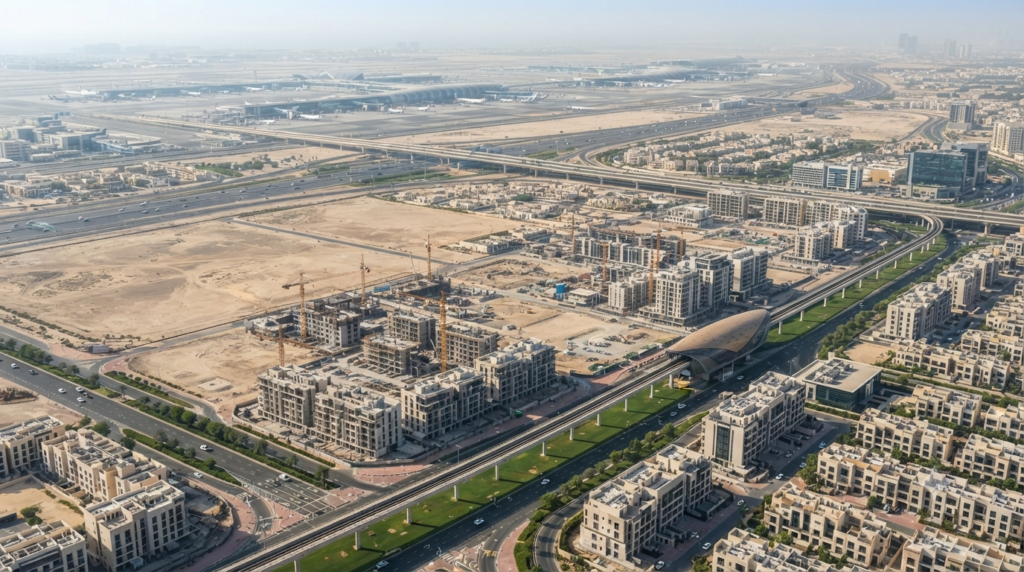
Three infrastructure projects will drive the next wave of appreciation across specific corridors. These catalysts are confirmed, funded, and underway.
Airport Expansion
Al Maktoum International Airport is being expanded into the world’s largest aviation hub. Capacity will reach 260 million passengers annually. Dubai South properties sit directly adjacent.
Entry prices in Dubai South remain among the lowest in the city at AED 950 per sqft. As construction milestones hit and media coverage increases, this area will attract significant capital inflows. For patient Sydney investors with a 5 to 8-year horizon, this is the strongest infrastructure play in the Dubai property market forecast 2026.
Metro Extension
The Dubai Metro Blue Line will extend into Creek Harbour, Dubai Hills, and Meydan. These communities currently trade at a discount due to connectivity limitations.
Historically, metro access adds 10% to 15% to property values in served areas. Properties along the new routes are expected to see meaningful appreciation as opening dates are confirmed. Sydney investors buying before the official route announcements capture pre-infrastructure pricing.
Population Growth
Dubai’s population surpassed 4 million in 2025. Growth exceeded 4% to 5% year on year. The Dubai property market 2040 Urban Master Plan targets 5.8 million residents.
That structural demand generates a need for 25,000 to 35,000 new housing units annually. More residents mean more tenants. More tenants mean sustained rental demand. This population trajectory is the single most important driver in the Dubai property market forecast 2026.
These long-term growth drivers extend beyond short-term market cycles and support sustained demand across key Dubai communities. For Sydney investors, identifying areas benefiting from major infrastructure and population growth can strengthen both rental returns and long-term capital appreciation.
Global Price Comparison
Dubai property market remains affordable relative to every major gateway city in the world. This comparison explains why global capital keeps flowing in despite short-term noise.
Price Per Square Foot
| City | Avg Price/sqft (USD) |
| Hong Kong | ~$2,457 |
| Singapore | ~$2,299 |
| London | ~$1,775 |
| New York | ~$1,728 |
| Paris | ~$1,390 |
| Sydney | ~$1,136 |
| Tokyo | ~$992 |
| Dubai | ~$673 |
Dubai property market costs less than half of Sydney per square foot. It delivers double the yield. It charges zero tax. The Dubai property market forecast 2026 becomes obvious when you see these numbers side by side.
Yield Comparison
| City | Avg Gross Yield | Income Tax on Rent |
| Dubai | 6.68% | 0% |
| Sydney | 3.3% | Up to 45% |
| London | 3 to 4% | Up to 45% |
| New York | 3 to 5% | Up to 37% |
| Singapore | 2 to 3% | Up to 22% |
This comparison highlights why the Dubai property market continues to attract international investors seeking stronger income returns. Higher rental yields combined with a tax-efficient environment give Sydney investors a significant advantage over many established global property markets.
Millionaire Inflows
The UAE attracted a net inflow of 9,800 millionaires in 2025, according to Henley & Partners. That carried an estimated US$63 billion in wealth. This is the highest inflow globally. The trend shows no sign of reversing. When the world’s wealthiest are buying, that is the strongest vote of confidence in any market forecast.
Continued wealth migration supports demand for premium homes, branded residences, and prime waterfront communities. As high-net-worth individuals establish long-term residency in the Dubai property market, they strengthen both property values and rental demand, reinforcing confidence in the market’s long-term outlook.
Should Sydney Investors Buy or Wait?

The honest answer depends on your strategy and timeline. This is where we separate data from opinion.
Buy Now If
You are a yield-focused investor entering at entry-level areas like JVC, Dubai South, or Business Bay. Yields of 6% to 8% start immediately on ready properties. Off-plan payment plans lock in today’s pricing with just 10% down.
Post-war price softening gives you a 4% to 7% entry discount versus pre-conflict peaks. The ceasefire has removed the sharpest edge of uncertainty. Every previous Dubai dip rewarded early movers. The Dubai property market forecast 2026 pattern is repeating.
Wait If
You are targeting ultra-luxury ready properties above AED 5 million and want to see whether the correction deepens over Q3 and Q4. Supply pressure in specific mid-market segments could create better pricing later in the year.
However, waiting carries its own risk. Prices rose 18% year on year from January 2025 to January 2026. If the market stabilises and resumes climbing, waiting costs you more than the correction saved.
Balanced Approach
Start with off-plan in a high-demand area. Lock in today’s price. Pay 10% now. Let the market play out over your 3 to 5-year construction timeline. By handover, both the war impact and any correction will be absorbed.
This is the approach most Sydney investors are taking right now. For the complete buying process, our step-by-step guide covers every stage.
The right decision depends on your investment goals, budget, and time horizon. Sydney investors who align their strategy with current market conditions are better positioned to benefit from both immediate opportunities and long-term growth.
The Forecast Is Clear
The Dubai property market forecast 2026 points to moderated growth, not collapse. Record Q1 numbers. Stable yields at 6.68%. Broadening global demand. Zero tax. Ceasefire in place. Infrastructure catalysts confirmed. And prices that remain half of Sydney per square foot.
The short-term noise is real. Transactions dipped in May. Some off-plan secondary stock traded below original values. But every structural pillar remains standing. Population growth. HNWI inflows. Regulatory transparency. Government infrastructure spend. These are not sentiment-driven. They are policy-driven.
Secure your free spot at dubaipropertyexposydney.com.au and make your 2026 decision with data, not headlines.
Frequently Asked Questions
Will Dubai property prices crash in 2026?
No credible data supports a crash. Prices softened 4% to 7% during the Iran conflict. May transactions dropped 19% from the pre-conflict run rate. But this is a sentiment-driven repricing, not forced selling. Q1 2026 recorded AED 252 billion in transactions, up 31% year on year. Structural demand from population growth, zero tax, and Golden Visa inflows remains intact. A mild correction is possible in oversupplied segments. A crash is not supported by any major analyst.
Is the Dubai property market forecast 2026 positive for Australian investors?
Yes, with caveats. Rental yields average 6.68% gross. Entry prices start from AUD 250,000. Zero tax on rental income. These fundamentals outperform Sydney at every price tier. The caveat is area selection. Mid-market segments with heavy new supply may see flat or modest growth. Prime and freehold zones with proven demand will outperform. Selectivity matters more in 2026 than in any recent year.
How much did the Dubai property market grow in 2025?
2025 was a record year. Total transaction value exceeded AED 682 billion across 214,912 sales. Average residential prices rose approximately 12% to 15% year on year. Population growth of approximately 120,000 net new residents supported rental demand. Hotel occupancy above 78% sustained short-term rental yields. This momentum carried into Q1 2026 before the Iran conflict created temporary disruption.
What are the biggest risks in the Dubai property market forecast 2026?
Three main risks: oversupply in specific mid-market areas (over 50,000 units scheduled for handover), geopolitical uncertainty if the ceasefire collapses, and currency fluctuation affecting AUD returns. All three are manageable through area selection, a 5-year minimum hold horizon, and specialist forex providers. Our guide on buying property in Dubai pros and cons covers every risk factor in detail.
Should Sydney investors buy now or wait until 2027?
The data favours acting now with discipline. Post-war softening gives 4% to 7% entry discounts. Off-plan payment plans lock in today’s prices with 10% down. Prices rose 18% between January 2025 and January 2026. If the market resumes climbing after stabilisation, waiting could cost more than the current dip saves. The Dubai Property Expo Sydney is the smartest way to compare options and decide with expert guidance rather than headline emotion