



Quick Answer
- Australians can legally buy freehold property in Dubai without a UAE visa or residency.
- The full purchase can be completed remotely from Sydney using digital documents and Power of Attorney.
- Total upfront buying costs run 7–8% of the purchase price, including the mandatory 4% DLD fee.
- Off-plan properties start from AUD 250,000 with interest-free developer payment plans requiring 10–20% upfront.
- Rental income must be declared to the ATO, but Dubai charges zero tax at source, avoiding double taxation.
Australians can legally buy freehold property in Dubai without a UAE visa, without flying overseas, and without a local bank account. That is the starting point most Sydney investors do not know. Buying property in Dubai from Australia in 2026 is governed by clear law, a transparent registration system, and a purchase process that can be completed entirely from your laptop in Sydney within 30 to 45 days.
The problem is that most Australians approach Dubai property as though it works like buying in another Australian state. It does not. The legal framework, cost structure, documentation requirements, and tax obligations are different, and getting any one of those wrong creates expensive delays or compliance gaps with the ATO. This guide gives you the complete picture before you commit a single dollar.
By the end of this article, you will understand where Australians can legally buy, the step-by-step purchase process from property selection to title deed, every cost you need to budget, ATO reporting obligations, and how to use the Dubai Property Expo Sydney as your most efficient entry point into the market.
Can Australians Buy Dubai Property?
The answer is a clear yes, and the legal basis for that is stronger than most investors realise. Law No. 7 of 2006 grants foreign nationals the right to own property in designated freehold zones across Dubai. This legislation gives you the same ownership rights as a UAE national in those areas: full title, no time limit, and the right to sell, lease, or inherit the property.
Freehold Zones Available
Not every area of Dubai is open to foreign buyers. The government designates specific zones as freehold, and all the most desirable communities fall within them. Here are the primary freehold zones where Sydney investors focus:
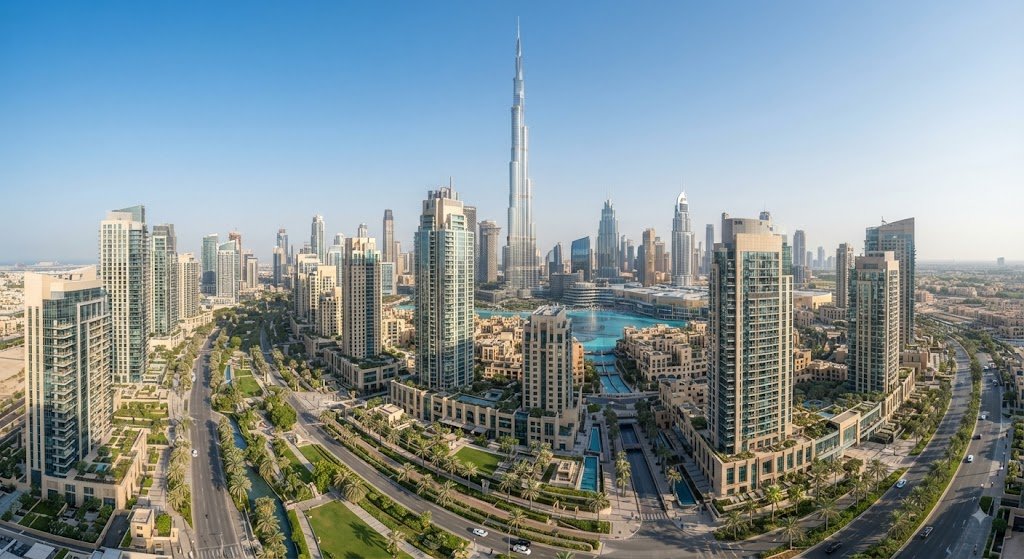
- Downtown Dubai: Emaar’s flagship district, home to Burj Khalifa and Dubai Mall
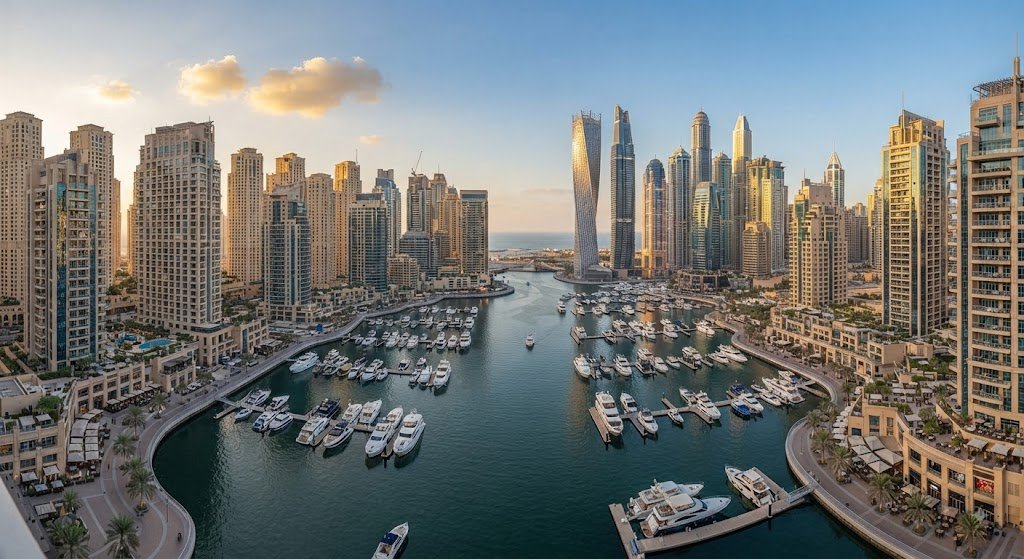
- Dubai Marina: Premium waterfront living with strong short-term rental demand
- Palm Jumeirah: Iconic island address, high capital value, luxury segment
- Dubai Hills Estate: Family-oriented master community with golf course frontage
- Jumeirah Village Circle (JVC): Mid-market yield leader, strong tenant demand
- Business Bay: Central location, corporate tenant base, canal-facing supply
- Dubai South: Emerging growth corridor near Al Maktoum International Airport
- Dubai Creek Harbour: Waterfront master development by Emaar, long-term growth play
Foreign nationals and expatriates can purchase freehold property in designated freehold zones, including Dubai Marina, Downtown Dubai, Palm Jumeirah, JVC, Business Bay and Arjan Dubai with 100% ownership rights.
Freehold ownership gives you full title registered under your name with the Dubai Land Department. It has no expiry date. You own the property, not a lease on it, and you can sell at any time without restriction.
Ownership Types Explained
Understanding the difference between ownership structures saves confusion when reviewing developer or agent contracts. Three types exist under Dubai law, but only one is relevant for most Australian investors.
| Ownership Type | What You Own | Typical Duration | Best For |
| Freehold | Property and land outright | Permanent | Most foreign investors |
| Leasehold | Right to use property | Up to 99 years | Some specific communities |
| Usufruct | Right to use and benefit | Long-term, not ownership | Rare, specific developments |
For buying property in Dubai from Australia, freehold is the standard and recommended structure. It provides the strongest legal protection, the highest resale liquidity, and the clearest inheritance path under UAE law.
The transition from eligibility to purchase is straightforward once you understand the process. What stops most Australians is not the law but the unfamiliarity with steps that differ from buying locally. The next section removes that barrier completely.
The Step-by-Step Buying Process
Dubai attracted AED 148.4 billion in foreign real estate investment in Q1 2026 alone, representing investors from over 150 nationalities. The process is more accessible, more transparent, and more internationally-friendly than ever before. The full purchase process for Australians can be completed without visiting Dubai, using Power of Attorney for the final transfer step if needed.
Here is the complete process from start to title deed.
Step 1: Define Goal and Budget
Set your primary objective before approaching any developer or agent. Buying property in Dubai from Australia produces very different outcomes depending on whether you prioritise rental income, capital growth, or Golden Visa eligibility. Each goal points to different communities, different property types, and different payment structures.
Budget planning must include two numbers: the property price and the total acquisition cost. Total upfront costs typically run 7–8% above the purchase price for a cash buyer and up to 10% for a mortgage buyer, covering the DLD fee, registration, and any agent commission.
For an AUD 300,000 property (approximately AED 720,000), budget an additional AUD 21,000–24,000 in transaction costs on top of the purchase price. For an AUD 500,000 property, that buffer rises to AUD 35,000–40,000. Factor this into your available capital before shortlisting properties.
Step 2: Select Property & Developer
Capital appreciation is the driver, but the smarter approach in 2026 is to underwrite building-by-building rather than assume “Dubai goes up.” Micro-location, service charges, and developer quality often decide whether your IRR is excellent or average.
Verify every developer through the Dubai Land Department REST platform before signing anything. Confirm:
- Developer RERA registration status
- Prior project completion track record
- Escrow account details for the specific project
- Service charge history per square foot in completed buildings
A careful review of these factors helps you separate genuinely strong investment opportunities from projects that may look attractive on paper but underperform after purchase.
Step 3: Sign MOU or SPA
Once you select your property, the purchase is formalised in one of two documents. For ready properties, you sign a Memorandum of Understanding (MOU) with the seller. For off-plan properties, you sign a Sales and Purchase Agreement (SPA) directly with the developer.
Both documents are legally binding. At MOU stage, a 10% deposit is standard for ready properties. For off-plan purchases, the booking deposit typically ranges from 5–20% depending on the developer. For off-plan investors, all payments must be held in a RERA-regulated escrow account to protect buyers from developer misuse. Escrow accounts are the backbone of legal and financial protection in Dubai for off-plan buyers.
The MOU or SPA can be signed digitally or by courier from Australia. No in-person attendance is required for this stage.
Step 4: Transfer and Title Deed
The final step is the title deed transfer, processed through a DLD-approved trustee office. This is the only stage that technically requires physical presence. However, if you cannot travel to Dubai for the transfer, you can appoint a trusted representative via a Power of Attorney to act on your behalf. This process typically takes 1–2 weeks and allows the entire transaction to be completed remotely.
At the trustee office, the following happens in sequence:
- Payment is verified and cleared
- DLD fees are paid in cash (not rolled into any mortgage or payment plan)
- Title deed is printed and stamped in your name
- Digital copy is issued through the DLD REST platform
You now legally own the property. The entire process from signed MOU to title deed typically takes 30 to 45 days for ready properties. Off-plan purchases are registered via Oqood (the DLD’s off-plan registration system) within days of signing the SPA.
From years of advising Sydney investors through this process, the biggest delays consistently occur when buyers are not pre-approved for finance or have not prepared their documentation in advance. Having your passport, bank statements, and ATO-compliant records ready before signing anything removes the two most common friction points.
Full Cost Breakdown for Australians
Buying property in Dubai from Australia involves a predictable set of costs once you know what they are. There are no surprise annual taxes, no stamp duty escalations based on property type, and no foreign buyer surcharges. The structure is front-loaded and transparent.
Government Fee Breakdown
Foreign buyers must factor in the following statutory fees: Dubai Land Department registration fee of 4% of purchase price, Trustee Office fee of AED 4,000 for properties valued above AED 500,000, NOC fee of AED 500 to 5,000 (developer-specific), mortgage registration fee of 0.25% of loan amount plus AED 290, and agency commission of typically 2% of the purchase price.
Here is the complete cost breakdown for a typical AED 1,500,000 purchase (approximately AUD 620,000):
| Cost Item | Rate | AED Amount | AUD Equivalent |
| DLD Transfer Fee | 4% of price | AED 60,000 | ~AUD 24,800 |
| Trustee Office Fee | Fixed | AED 4,200 | ~AUD 1,730 |
| Title Deed Issuance | Fixed | AED 250 | ~AUD 103 |
| Property Map Fee | Fixed | AED 250 | ~AUD 103 |
| Agency Commission (resale) | 2% of price | AED 30,000 | ~AUD 12,400 |
| NOC Fee (resale) | Developer-set | AED 500–5,000 | ~AUD 206–2,060 |
| Total Estimated Upfront Costs | ~6.5–7% | ~AED 95,000–100,000 | ~AUD 39,200–41,300 |
Off-plan purchases from developers typically carry zero agency commission, as developers pay agent fees directly. This reduces buyer acquisition costs to approximately 4.5–5% for off-plan purchases.
No Recurring Property Taxes
Dubai has no annual property tax, no capital gains tax, and no tax on rental income. Most costs are paid upfront, making Dubai one of the most tax-efficient real estate markets globally.
For Sydney investors used to land tax, council rates, strata levies, and CGT on investment properties, the Dubai cost structure after purchase is a significant contrast. The only recurring costs after purchase are:
- Body corporate or service charges (RERA-regulated, varies by building)
- DEWA utility connection fee if not pre-existing (AED 2,000–4,000)
- Building insurance (typically included in service charges)
- Property management fees if using a local agent (7–12% of annual rent)
The absence of annual property tax is not a marketing claim. It is structural. Dubai’s government revenue comes from other sources. This is a permanent feature of the market, not a promotional incentive that expires.
ATO Rules for Sydney Investors
Buying property in Dubai from Australia does not exempt you from Australian tax obligations. This is the most consistently misunderstood aspect of overseas property ownership among Sydney investors, and getting it wrong is expensive to fix retrospectively.
Australian residents must declare foreign rental income to the ATO. It is standard practice. Keep transparent records and you will be fine. There is no double taxation since Dubai does not levy rental tax in the first place. If you plan to repatriate rental earnings, check conversion fees early.
What You Must Declare
The ATO treats Australian tax residents as assessable on worldwide income. That means every dollar of Dubai rental income must be declared in your Australian tax return, converted to AUD at the ATO’s official exchange rates for the relevant income year. Key obligations include:
- Gross Dubai rental income (converted to AUD annually)
- Capital gain on any property sale (Australian CGT applies to the profit, even though Dubai charges no local CGT)
- Foreign income tax offset (you can claim any tax paid overseas; since Dubai charges zero, no offset applies, but the declaration is still mandatory)
Australian investors should keep clear records of rental income, sale proceeds, and currency conversions so each amount can be reported correctly to the ATO. Even when no UAE tax is payable, the Australian reporting obligation still applies.
What You Can Deduct
The positive side of ATO reporting is that genuine investment expenses are deductible against your Dubai rental income. These may include:
- Mortgage interest paid to UAE banks (if financed)
- Property management fees paid in Dubai
- RERA service charges and building maintenance costs
- Travel to inspect the property (subject to ATO apportionment rules)
- Depreciation on fittings and chattels (where a depreciation schedule is prepared)
Engage a registered Australian tax agent with overseas property experience before your first rental income year. The deduction framework for foreign property is not identical to domestic investment property rules, and the differences matter for your net return calculation.
Double Tax Agreement Note
Australia and the UAE do not have a formal Double Tax Agreement. However, because Dubai charges zero rental income tax at source, the absence of a DTA creates no practical double taxation problem for Sydney investors. You pay Australian tax on Dubai rental income at your marginal rate, and you pay nothing in Dubai. The two systems do not overlap.
Where the gap matters is on sale proceeds. If you sell a Dubai property for a profit, the ATO will assess Australian capital gains tax on that profit. Budget for this in your exit strategy from day one, and speak to your tax agent about strategies including the 50% CGT discount for assets held over 12 months.
Ready to Buy Dubai Property from Sydney?
The process of buying property in Dubai from Australia is clearer, faster, and more legally protected than most Sydney investors expect.
Register for the Dubai Property Expo Sydney and meet licensed Dubai developers face-to-face, compare projects from AUD 250,000, and get your questions answered by advisors who work with Australian buyers every week.
Frequently Asked Questions
Can Australians buy property in Dubai without a visa?
Yes. Australian citizens can purchase freehold property in Dubai without holding any UAE residency visa or work permit. The only documents required are a valid passport and proof of funds or financing. Freehold ownership means you own the unit and the land it stands on permanently. Most Australian investors focus on established freehold zones like Downtown Dubai, Palm Jumeirah, Business Bay, and Dubai Marina, which provide the strongest control and resale value. A UAE residency visa is optional and can be obtained after purchase if the property value qualifies, but it is never a prerequisite for buying.
What are the total costs of buying property in Dubai as an Australian?
In 2026, total buying costs in Dubai are typically 7–8% of the property price, including the DLD fee, registration fees, admin charges, and agent commission. The largest single item is the mandatory 4% Dubai Land Department transfer fee, paid at the time of title deed registration. For off-plan purchases directly from developers, the agency commission of 2% is typically absorbed by the developer, reducing your total acquisition costs to approximately 4.5–5%. There are no annual property taxes, no capital gains tax in Dubai, and no rental income tax charged locally, making the ongoing cost structure far lighter than Australian investment property ownership.
Do I need to travel to Dubai to complete the purchase?
No. You can complete the entire purchase remotely using virtual tours, digital documentation, Power of Attorney if needed, and secure settlement through approved channels. The MOU or SPA is signed digitally or by courier. Payment is transferred internationally. The title deed transfer at the DLD trustee office can be handled by an appointed representative under a notarised Power of Attorney if you are not present in Dubai. The entire process from reservation to title deed typically takes 30 to 45 days for ready properties and can be managed entirely from Sydney.
How do I declare Dubai property income to the ATO?
Australian tax residents must declare all overseas rental income in their annual Australian tax return, regardless of whether tax was paid in the source country. Dubai charges zero rental income tax, so no foreign tax credit applies. You declare your gross Dubai rental income converted to AUD at the ATO’s official exchange rates, then claim legitimate deductions including property management fees, maintenance costs, and mortgage interest if applicable. The net rental income is added to your total assessable income and taxed at your marginal rate. Engage a registered tax agent with overseas property experience before your first rental income year to set up your reporting correctly from the start.
What is the minimum amount needed to buy Dubai property from Australia?
Entry-level apartments start from approximately AUD 250,000 for off-plan studios in areas like JVC or Dubai Creek Harbour. Some off-plan options require just AUD 25,000 upfront with interest-free payment plans spanning 3 to 5 years. Ready properties in established communities generally start from AUD 300,000 to AUD 400,000. Golden Visa-qualifying properties require a minimum investment of AED 2 million, which sits at approximately AUD 820,000 at current exchange rates. Budget an additional 7–8% on top of your target purchase price to cover all transaction costs, and ensure your available capital covers both the deposit and the DLD fees, which cannot be financed and must be paid in cash at transfer.